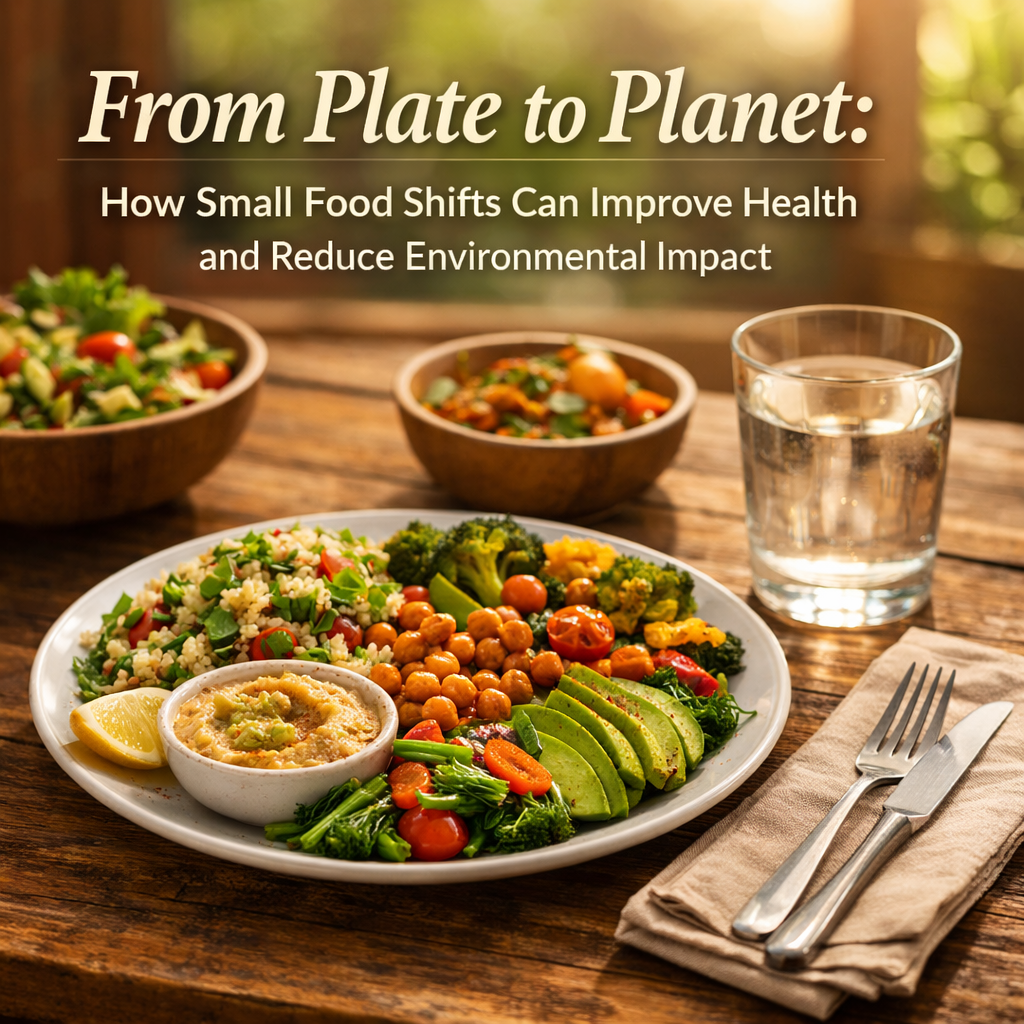
Food choices are increasingly recognized as a critical link between individual health, population health, and environmental sustainability. For healthcare professionals, this connection is no longer theoretical. What clinicians, staff, and patients eat on a daily basis influences chronic disease risk, healthcare utilization, and the environmental footprint of the health sector itself.
Importantly, the evidence shows that meaningful benefits do not require extreme dietary changes. Small, consistent shifts in food choices by patients can produce measurable gains.
Vegetarian or Vegan Not Required
Diet-related chronic conditions such as cardiovascular disease, type 2 diabetes, obesity, and hypertension remain among the most common diagnoses in outpatient care. At the same time, global food systems are responsible for approximately 30–34% of world greenhouse gas emissions, driven largely by food waste, energy-intensive production, and high-emission animal products.
The research is clear that dietary patterns emphasizing whole foods, fruits and vegetables, legumes (beans, lentils, peas, peanuts, and soybeans),.and moderate animal protein intake are associated with improved cardiometabolic outcomes and lower all-cause mortality. These same dietary patterns also generate substantially lower greenhouse gas emissions, land use, and water use compared with diets high in red meat and ultra-processed foods. A 2025 review published in The Lancet Planetary Health found that even partial dietary shifts—not strict vegetarian or vegan diets—were associated with both improved health outcomes and significant reductions in environmental impact.
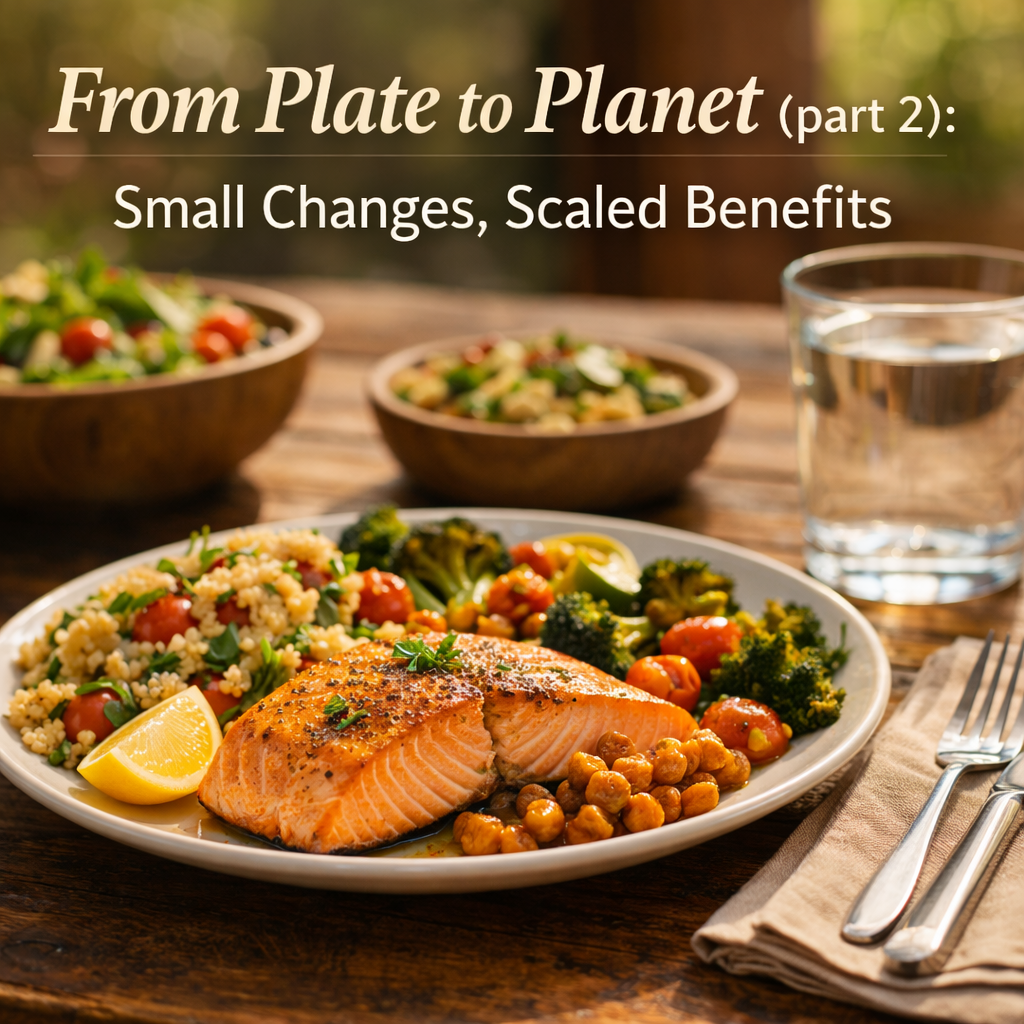
Small Changes, Scaled Benefits
Some of the most effective food-related interventions are also the most achievable:
-
Reducing food waste at home and in healthcare workplaces
-
Choosing plant-forward meals more frequently
-
Favoring minimally processed or unprocessed foods
-
Being mindful of portion sizes and overconsumption
-
Selecting seasonal and locally available foods when feasible
The Intergovernmental Panel on Climate Change (IPCC) 2023 Synthesis Report identifies food loss and waste reduction as one of the highest-impact, lowest-cost climate mitigation strategies, with immediate benefits for households, institutions, and communities. From a clinical perspective, these same interventions are associated with improved dietary quality, lower patient inflammatory markers, and reduced cardiometabolic risk.
Why the Healthcare Setting Matters
Healthcare professionals are uniquely positioned as trusted messengers. When clinicians discuss food choices in the context of health—rather than as ideology—patients are more likely to listen and engage. The foods consumed in the office also matter. Break room offerings, catered meetings, vending machines, and workplace norms influence daily behavior. When food-related sustainability efforts are framed as supporting health and well-being, staff engagement tends to be higher and more durable.
How My Green Doctor Supports Sustainable Food Behaviors
Many practices struggle to translate awareness into consistent action. My Green Doctor’s proctice management program devotes a full month to this topic. The “Healthy Foods Workbook” is combined with educational brochures and expert coaching of practice mangers and clincians alike. Rather than adding mandates or administrative burden, My Green Doctor facilitates:
-
Practical, achievable actions aligned with real clinical workflows
-
Engaging physicians, staff, and leadership around shared goals
-
Integrating sustainability into existing quality improvement and wellness initiatives
-
Reinforcing patient education through consistent, evidence-based messaging
-
Building momentum through visible wins, including reduced waste, cost savings, and improved staff morale.
Practices that adopt these approaches can expect:
-
Improved staff engagement and job satisfaction
-
More successful recruitment of the finest young clincians
-
Stronger patient trust and alignment with preventive care messaging
-
Reduced food waste and operating costs
-
Clear alignment between health promotion and environmental responsibility.
Implications for Patients
Patients expect healthcare organizations to reflect the community’s values. When sustainability is visible in practical, health-centered ways—including how food is discussed and modeled—it strengthens credibility and reinforces preventive care. Clinicians can encourage patients to make these evidence-based food choices as part of overall health.
The Bottom Line
Whether in the clinic lunch room or in patient homes, small shifts in food chocies can improve health outcomes, reduce environmental impact, and strengthen healthcare culture. With appropriate guidance and structure, sustainability becomes not an added task, but an extension of good medical practice. The approach offered by My Green Doctor’s workbooks and coachign is practical, evidence-based, and designed to work in real-world healthcare settings.
Sources for Additional Reading
1. IPCC, 2023: Climate Change 2023: Synthesis Report. Contribution of Working Groups I, II and III to the Sixth Assessment Report of the Intergovernmental Panel on Climate Change https://doi.org/10.59327/IPCC/AR6-9789291691647.
2. https://www.thelancet.com/journals/lanhl/article/PIIS2666-7568(25)00061-3/fulltext