The Next Generation of Clinicians Is Choosing Purpose — and Healthcare Organizations Are Being Evaluated Accordingly
A growing body of research makes one thing clear: climate change and environmental sustainability are no longer peripheral issues in healthcare. They are increasingly shaping professional identity, workplace expectations, and career decisions — particularly among early career clinicians.
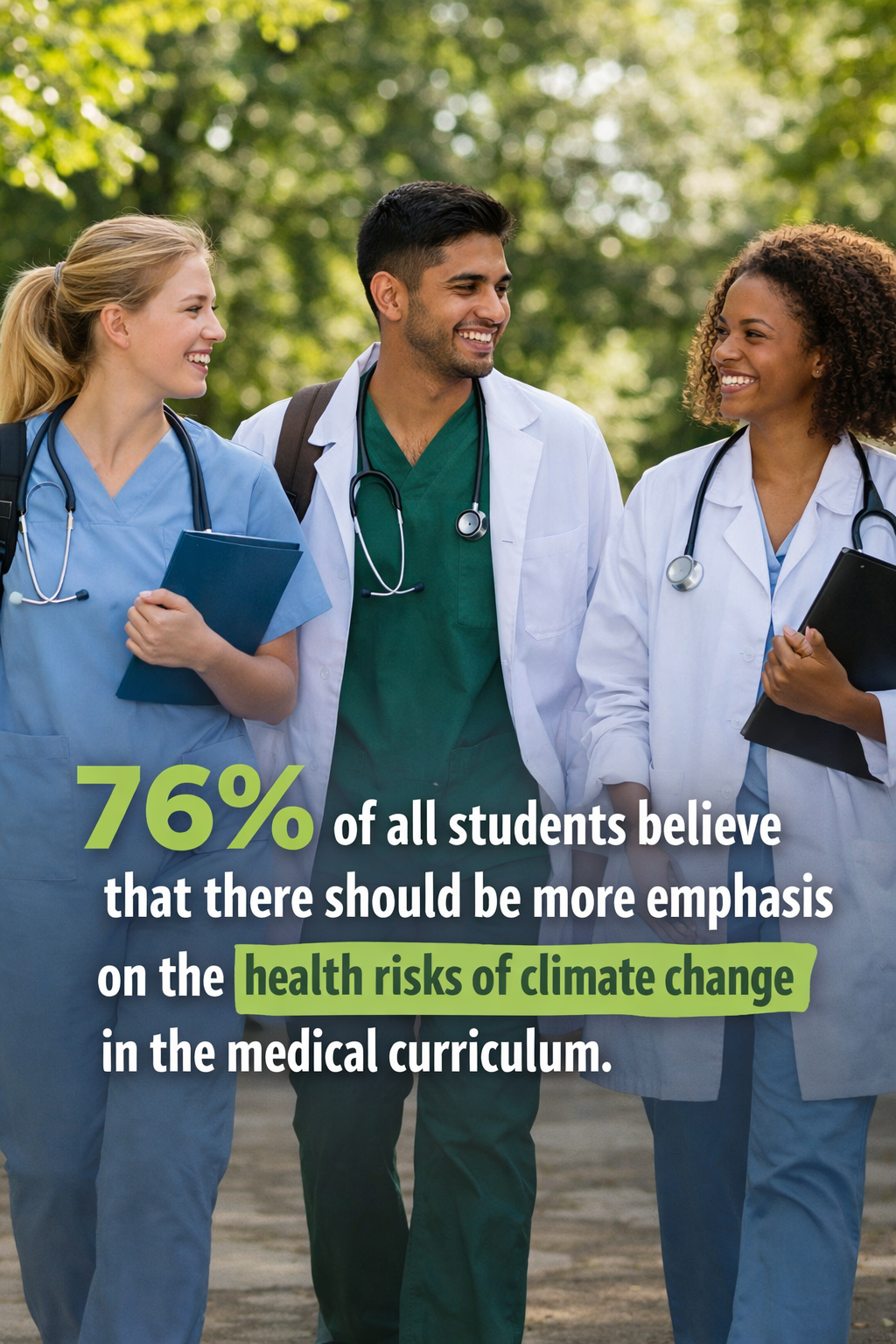
A recent national survey of Dutch medical students and recent graduates found that 72% reported there were no educational sessions in their curriculum addressing the health risks of climate change, while 76% believed there should be more emphasis on the health impacts of climate change in medical education. This gap between expectation and formal training is striking.
These findings suggest two important realities. First, future clinicians understand that climate change is directly connected to patient health — through heat-related illness, respiratory disease, infectious disease spread, food insecurity, and mental health stressors. Second, they perceive that their education systems are not yet fully preparing them to address these realities in practice. The implications extend beyond medical schools. As these students move into residency and early-career practice, their expectations do not disappear. Instead, they carry them into career choices and workplace evaluations.
Increasingly, early-career clinicians are assessing potential employers not only on compensation and scheduling, but on whether an organization’s stated values are reflected in operational behavior. Sustainability is becoming one of those markers.
Medical oncologist Dr. Ashray Maniar practices at Northwest Permanente at Kaiser in Portland, Oregon. He speaks publicly about choosing to work within a system that takes climate responsibility seriously. His decision was not based on perfection. Rather, it was grounded in whether the organization he would work with acknowledges healthcare’s environmental footprint and demonstrates structured support for meaningful improvement.
That distinction is important. Young clinicians are not expecting flawless systems. They are looking for credibility, accountability, and visible progress.
This trend is reinforced by data from the United States. In a recent Commonwealth Fund report, a large proportion of surveyed U.S. healthcare workers statted that they want their employers to address climate change and reduce environmental impact. Many indicated that organizational commitment to sustainability influences morale and long-term engagement.
Healthcare systems today are navigating one of the most competitive labor markets in recent history. Recruitment and retention remain top operational concerns worldwide. Within this environment, sustainability is emerging not as a marketing message, but as a component of workforce strategy. Organizations that integrate sustainability into core operations — rather than treating it as an add-on initiative — position themselves more competitively in attracting values-driven clinicians.
Many health systems are taking solid sustainability steps in their hospital buildings but most are ignoring their hundreds of owned clinics and affiliated practices. For clinics and health systems, the challenge lies in translating intention into structured action. Sustainability must be operationalized in ways that align with clinical priorities, financial realities, and patient care standards. It must be visible in leadership decisions, procurement practices, energy use, waste reduction strategies, and staff engagement processes.
This is where structured coaching and consulting can play a meaningful role. My Green Doctor’s practice management program helps clinics embed evidence-based sustainability improvements directly into everyday clinical operations. By guiding leadership teams and staff through achievable, measurable steps, sustainability becomes part of organizational culture rather than an additional burden placed on already stretched clinicians.
When environmental responsibility is integrated thoughtfully — with practical tools, clear frameworks, and leadership support — it strengthens both operational performance and workplace trust.
This signals something powerful to young healthcare professionals, that their concerns about climate and patient health are recognized and supported. For organizations, it provides a pathway to differentiate themselves in a competitive hiring landscape while improving efficiency and long-term resilience.
Healthcare has always evolved in response to emerging public health challenges. Climate change represents one of the defining health challenges of this generation. As medical education, workforce expectations, and organizational leadership continue to adapt, sustainability is becoming part of what it means to practice responsible medicine.

References
Dutch medical student sustainability report:
https://degeneeskundestudent.nl/wp-content/uploads/2023/09/Rapport-Duurzaamheid-Engels.pdf
Commonwealth Fund Issue Brief (January 2024):
https://www.commonwealthfund.org/publications/issue-briefs/2024/jan/us-health-care-workers-want-employers-address-climate-change
HealthManagement.org article on recruiting for sustainability:
https://healthmanagement.org/uploads/article_attachment/hm1-25-recruiting-for-sustainability-print.pdf