
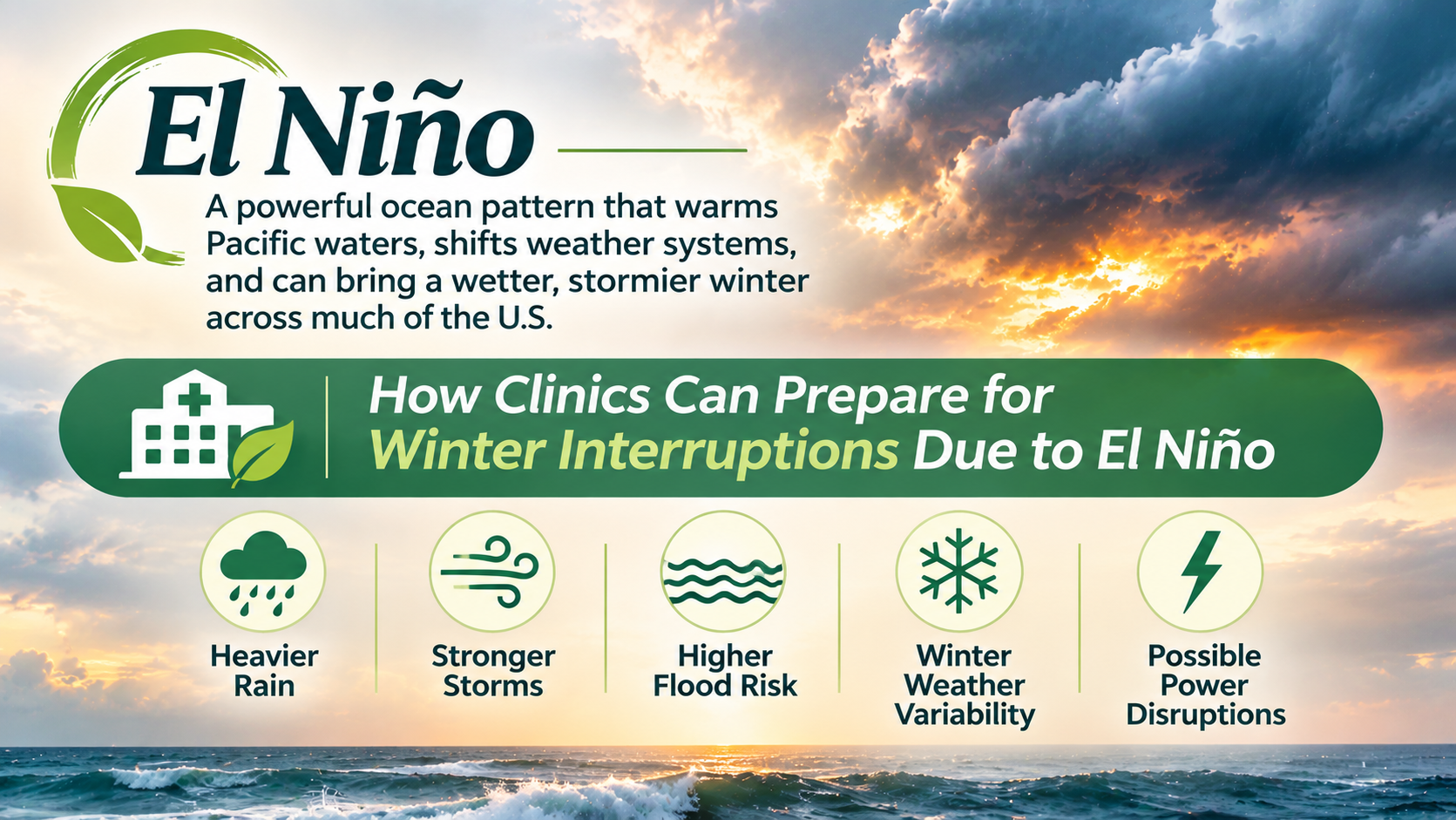
This winter, an ocean-atmosphere pattern thousands of miles away could influence the daily operations of healthcare clinics across the United States. El Niño develops when surface waters in the central and eastern tropical Pacific Ocean become unusually warm, changing atmospheric circulation and shifting the paths of storms. NOAA’s November 19, 2026 outlook report expects a strong El Niño to persist through the winter, with higher odds of wetter-than-average conditions in parts of the southern and eastern United States. The effects will be felt around the world. Columbia University’s November seasonal outlook predicts wetter conditions in southeastern South America and drier conditions in southern Africa.
A seasonal outlook describes probabilities over several months, and local impacts will vary. Nevertheless, wetter conditions in parts of the United States can expose operational vulnerabilities: flooded roads, water intrusion, interrupted electricity, delayed deliveries, staff transportation challenges, and canceled appointments. In other regions, ice, snow, or unusually dry conditions may be the more immediate concern.
For every clinic, the central question is not whether a major weather event will occur, but whether essential services can continue if one does. Start with a site-specific review of roof drainage, entrances, vulnerable equipment, and nearby access routes. Some of the common issues include: confirming who monitors National Weather Service alerts and who has authority to adjust hours or activate emergency procedures; testing backup power arrangements for critical equipment and determining how to protect electronic records, refrigeration, communications, and medication storage during an outage. Are you confident that you can communicate with your staff in an emergency and that each individual will be safe?
Patient communication deserves equal attention. Prepare clear messages for closures, rescheduling, telehealth options where appropriate, and medication or treatment continuity. Identify patients whose care may be especially difficult to interrupt, and make sure staff know how to reach them safely and consistently.
El Niño offers a useful reminder that resilience is not only about surviving an extreme event. It is about reducing avoidable disruption before the first warning arrives. A short preparedness review now can help clinics protect patients, staff, facilities, and trust throughout the winter.
Resilience Planning Workbook can help clinics turn these concerns into a practical preparedness review. By engaging with the MGD Coaching specialists, clinic teams can identify weather-related vulnerabilities, discuss steps to protect essential services, and establish priorities for action. Revisiting the workbook before and during winter can also help keep preparedness responsibilities visible, rather than waiting until severe weather is imminent.
For Further Reading
- NOAA — El Niño Looms Large Over U.S. Winter Outlook
https://www.noaa.gov/news-release/el-nino-looms-large-over-us-winter-outlook - NOAA Climate Prediction Center — Seasonal Outlook Discussion
https://www.cpc.ncep.noaa.gov/products/predictions/90day/fxus05.html - Columbia University — November 2026 Seasonal Forecast.

