Workbook 8: Resilience Planninng

Introduction

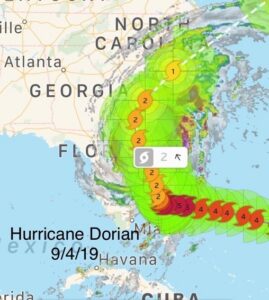
“Resilience” means the ability to adapt, recover, and keep going when faced with adversity. An outpatient healthcare practice may face a natural disaster such as a wildfire, neighborhood fire, earthquake,severe storm, flood, or extreme heat event. These natural disasters, including earthquakes in some regions, are more frequent and more severe in the era of climate change. You may experience the loss of electricity, natural gas, or internet to your building. This Workbook is a practical guide to prepare outpatient clinics, practices, and ambulatory centers to minimize losses and to recover quickly from these threats to people, property, and data.

We recommend that practice managers gradually work through the ideas below that are relevant to their building, geography, and climate. For each topic of this workbook, we will first help you to identify your vulnerabilities and then will help you create an emergency plan for each topic. Your plan will give staff members and patients a roadmap to follow in the event of a disaster. This Workbook includes the following topics:

• Patients and Visitors
• Staff
• Your Building
• Electricity and Natural Gas
• Data and Communications
• Supplies: Supply Chain Readiness
• Financial Readiness
• Community Preparation

Transportation and Commuting Action Steps

At first it may seem odd that transportation should be a concern for the doctor office.  But once your Green Team considers the enormous time and expense of travel to and from the office, of moving people and goods for the office, and the environmental results, you will appreciate the potential benefits of a transportation and commuting. We’ll review the following subjects:

  1. “Quick Start Now!”
  2. Vehicle choice
  3. Commuting to work, including carpooling and public transportation
  4. Work assignments, including telecommuting and choice of vendors
  5. Driving skills, including vehicle idling

We will walk you through a list of action steps you can take in each of these categories.  We provide a lot of time-tested questions and solutions that have been considered by other offices and other businesses. 

Many times we will challenge your Green Team to come up with your own ideas by asking you, What else?  Please email us your ‘What Else’ ideas for us to add to the Workbook.

Vehicle choice

  • Make a list of the vehicles used by office members to travel to work and the office’s average miles-per-gallon (mpg) for city driving, as listed by the US Environmental Protection Agency www.fueleconomy.gov/Feg/findacar.htm.
  • Set a goal to increase the office’s average mpg by 5mpg in 2 years.
  • Make a list of the office’s carbon footprint (the carbon dioxide released annually) for the vehicles used by office workers www.fueleconomy.gov/Feg/findacar.htm.
  • Set a goal to decrease the office’s transportation carbon footprint by 5% in 2 years.
  • Make a list of vehicles owned by the doctor office, and the fleet’s average miles-per-gallon (mpg) or liters per kilometer for city driving.
  • Set a goal to increase the doctor office fleet’s average mpg by 5mpg in 2 years.
  • Buy an Electric Car or Hybrid: Electric cars, now widely available in the US and other countries, make sense for your finances and for the environment. Electric cars in the US can be powered for approximately $0.70 per mile driven, which saves fossil fuels, and affords you $7,500 or more in tax incentives.
  • Install electric outlets in your parking area to charge electric vehicles.
  • Install electric outlets in your parking area to charge electric vehicles.
  • Install electric outlets in your parking area to charge electric vehicles.
  • Create a handout for your waiting room to tell patients about vehicle choices, the financial costs of transportation, and the health effects of air pollution. Include a list of websites where consumers can find information on cleaner, healthier vehicles. Also prepare an educational handout or brochure for your office waiting room about the advantages and availability of electric and hybrid vehicles.

Commuting to Work

  • Create an office carpooling program. Ask the office to give a small bonus to carpoolers ($20/month?) because office work can be accomplished while carpooling and carpooling can boost job satisfaction and morale.
  • Display ìWe Carpool!î signs in the office and waiting room.
  • Encourage use of bicycles and motorcycles by providing safe, secure bike racks and motorcycle parking.
  • Encourage safe use of bicycles and motorcycles, including the use of helmets, protective clothing, and proper shoes.
  • Discuss ways to encourage the use of public transportation.  Share those ideas with the GDOP.
  • Add to your doctor office brochures, website and stationery information on public transportation (bus and subway lines).
  • Create a handout for your waiting room to tell patients about public transportation’s benefits, and the bus and subway lines that reach your doctor offices.
  • “Adopt a Bus Stop” if such a program is available in your community, or start such a program to encourage use of public transportation.
  • Discuss ways to encourage walking by office workers, families and patients.Share those ideas with the GDOP.
  • Display ìWe Walk !î signs in the office and waiting room.
  • Create a handout for your waiting room to tell patients about the health and environmental benefits of walking.

Work Assignments and Telemedicine

  • Adopt a policy to consider transportation in making work assignments.  If you have more than one office, assign employees to the office closest to their home. Plan work assignments to avoid the times of day with the worst road or transit congestion. If driving is required once at work, try to coordinate trips and to use alternatives such as conference calls or email.  Encourage employees to suggest ways to decrease transportation needs and costs.
  • Adopt a policy to encourage telecommuting (working from home) for at least part of the week for some employees, saving time, transportation, and office overhead costs.  Encourage employees to suggest how they might work from home for part of or for their entire job.  Please share your telecommuting experience with us at My Green Doctor.

Choose Green Vendors

  • Adopt a policy to choose vendors for your office who have a green vehicle fleet, meaning those that may use electric or hybrid vehicles, avoid old diesel trucks, and have adopted policies for safe driving, proper vehicle maintenance, and avoidance of vehicle idling. Just by asking your vendors these questions, you likely will influence their future behaviors.

Artificial Intelligence and Telemedicine Patient Appointments

  • Telemedicine appointments allow the patient to stay home and meet with the doctor, nurse practitioner, or nurse by computer or telephone. This saves the office overhead costs and is convenient, money-saving, and energy-saving for patients and families. Use artificial intelligence to study each clinician’s ordering practices and to alert a clinician when the next patient appointment might be a telemedicine visit. My Green Doctor has AI experts who can help add this feature to your practice’s electronic health record. Contact us at [email protected].

Driving Skills and Vehicle Idling

  • Adopt an office policy to encourage safe driving, proper vehicle maintenance, and minimize vehicle idling.
  • Create a handout for your office to inform staff and patients about the benefits of safe driving, proper vehicle maintenance, and avoidance of vehicle idling. Safe driving includes obeying the speed limit and avoiding rapid acceleration; proper maintenance includes keeping the car tuned, the air filters replaced regularly, following the manufacturer’s recommended oil changes, checking tire inflation monthly, and eliminating excess baggage in vehicles.
  • Contact your mayor and city councilman to ask your community to adopt a vehicle idling ordinance. Contact My Green Doctor for further assistance.

Tips for Success

Your Improvement Plan consists of the Action Steps that you choose to adopt for the office.

For each action step:

  • Record your situation before you begin making improvements, such as the average vehicle miles-per-gallon for city driving for vehicles used for commuting, the percentage of workers in the office who carpool,  or the percentage of office workers regularly using public transportation to get to work. Record this data on a Green team Notes form or in a spreadsheet
  • Establish specific, measurable, date-certain targets for what you want to accomplish such as, ìTo raise our average vehicle miles-per-gallon by 5 mpg in 2 years, or “Install a bicycle rack by June 1,” or “Create a car-pool program by March 1.”
  • Agree on a leader for each Action Step.
  • Agree on the responsibilities of each person in the office.
  • If needed, obtain agreement or approval from the office manager or chief executive.
  • Communicate with your office colleagues.  Listen for ideas and try to elicit helpful criticisms.
  • Educate your patients, families & community.   Which ideas could be shared with your own families or with your patients?  Part of the Green Team’s Improvement Plan must include an education plan.  Your waiting room can become a site for education.
  • Reassess the Plan after a reasonable period.

Background Information

  • Air pollution from transportation causes significant health problems, including asthma, bronchitis, heart attacks and cancer.
  • Your choice of vehicle has a large impact on your family’s carbon footprint; because for most American families 51% of their carbon dioxide release is related to transportation.
  • The United States, with just 4% of the world’s population, generates 25% of the planet’s greenhouse gases.
  • Boosting the average US vehicle gas consumption from 20 miles per gallon to 33mpg would eliminate all US oil imports from the Middle East.
  • Choosing hybrid and smaller vehicles provides higher fuel efficiency.
  • Electric vehicles are now fully available in the United States and many other countries. Electric cars now make sense for your finances and for the environment. New technology, new vehicles, generous government tax savings and the rising price of gasoline make this possible.
  • Some countries offer tax benefits or discounts for the purchase of low-pollution vehicles. In 2011, Congress is offering electric car buyers a $7,500 tax credit, and some states and cities provide additional subsidies. The Nissan Leaf sells in 2011 for $33,000 and the Volt for $41,000.
  • In 2009, Americans spent $325 billion on gasoline.
  • ìAlternative Fuels,î those other than gasoline, can be cleaner for the environment and more efficient.  These include diesel fuel when used in the new, advanced engines; biofuels, the liquid fuels made from agricultural products and plant wastes; natural gas that burns cleaner than gasoline; and plug-in hybrid cars and other electric vehicles.  Hydrogen-based fuel cells are often discussed in the media but this technology is likely two decades from commercial practicality.  A summary of alternative fuels is available from the Environment and Energy Study Institute: www.eesi.org/vehicles_fuels.
  • Alternative Fuels, those other than gasoline, can be cleaner for the environment and more efficient.These include diesel fuel when used in the new, advanced engines; biofuels, the liquid fuels made from

  • Telecommuting (working from home) one or more days per week can save time, money, and fuel use. Telecommuting can increase productivity and decrease stress, while building loyalty and job satisfaction. Read Article here.

  • Tellecommute Connect

  • Walking and bicycling contribute to mental and physical health, and help the environment.  A staggering quarter of a million deaths each year in the US can be attributed to physical inactivity, according to  the American College of Sports Medicine, the President’s Council on Physical Fitness, and the Centers for Disease Control. See http://walking.about.com/.

  • Good driving habits and proper vehicle maintenance are not just about safety. They also save money and avoid pollution. Safe drivers are also Green drivers, achieving 7-10% better fuel economy. My Green Doctor offers many driving tips for office workers, families and patients. Read more here and here. 

  • Businesses and consumers can save money and improve air quality by not idling their vehicles when not moving.  Unnecessary truck and bus idling wastes three percent of all diesel fuel consumed for road transportation (US EPA).  Many businesses and governments have adopted policies or ordinances directed to decrease idling.
error: You may need to log in with your user name and password to see this content, or switch to a higher membership category. We're happy to help: [email protected].
Verified by MonsterInsights